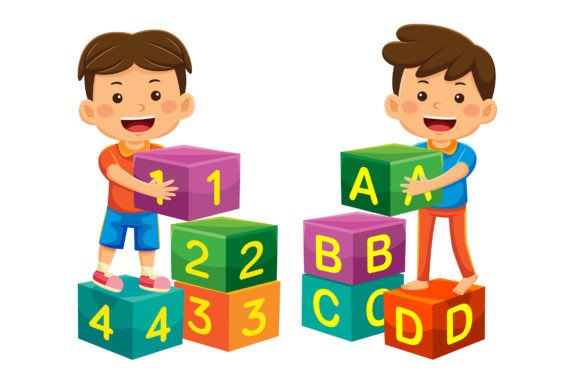
Back to School Vector Illustration 24: A Practical Asset for Designers and Communicators
Back to School Vector Illustration 24 is a curated set of scalable, editable vector graphics designed specifically for educational, promotional, and brand-aligned visual communication. Unlike generic clipart or raster-based assets, this collection delivers consistency, precision, and adaptability — qualities that matter when time, clarity, and professional polish are non-negotiable. It’s not just about seasonal relevance; it’s about having a reliable, production-ready toolkit that integrates smoothly into real workflows.
What Makes This Collection Stand Out
The core value lies in its structure and technical execution. Each of the 100 illustrations is built as a layered, fully separated vector in Adobe Illustrator — meaning every shape, text element, icon, and background component can be selected, recolored, resized, or hidden independently. There are no embedded rasters or flattened paths. The flat design style avoids visual noise while supporting strong readability at any scale — from a mobile app banner to a printed classroom poster.
File delivery includes both EPS (for full vector editing) and high-resolution JPGs (5000 × 5000 pixels), offering flexibility across platforms. Designers who work with CMS tools, email builders, or social media schedulers can use the JPGs directly where vector support isn’t available — without sacrificing sharpness. Meanwhile, those using Illustrator, Affinity Designer, or Figma (via SVG conversion) retain full editability.
Real-World Usability Across Roles
For marketers launching back-to-school campaigns, these illustrations reduce dependency on custom illustration timelines. A small business owner promoting tutoring services can quickly assemble a landing page hero section by combining a chalkboard icon, notebook motif, and stylized pencil — all from the same consistent visual language. An educator building a digital course syllabus can add visual cues to learning modules without compromising accessibility or loading speed.
Freelancers and agencies benefit from the uniformity across the set. When delivering branded assets to clients — say, a series of Instagram carousels for an edtech startup — using Back to School Vector Illustration 24 ensures tone and proportion remain cohesive, even when multiple designers contribute. No need to reverse-engineer matching line weights or color palettes.
Bloggers and content creators often face tight deadlines and limited design resources. With these vectors, a quick infographic comparing study methods becomes feasible in under an hour: swap colors to match brand guidelines, layer icons over clean backgrounds, export at web-optimized dimensions — all without outsourcing or licensing concerns.
Strengths in Flexibility and Consistency
One of the most practical advantages is the ability to remix elements. You’re not locked into precomposed scenes. A backpack icon can be isolated and paired with a graduation cap from another illustration; a lightbulb graphic can be recolored and placed inside a speech bubble for a “tips” section. This modularity supports iterative design and A/B testing — especially useful for landing pages where visual hierarchy directly impacts conversion.
Color customization works predictably because fills are applied as solid swatches, not gradients or transparency overlays. That means changing a blue textbook to purple takes two clicks — no risk of unintended blending or pixelation. Resizing behaves as expected: no jagged edges, no reflow issues, no loss of alignment between text and objects.
The flat design aesthetic also contributes to longevity. While trends shift, clean lines and purposeful simplicity ensure these illustrations won’t feel dated within a year. They integrate equally well with minimalist websites and vibrant social feeds — a functional neutrality that’s rare in themed asset packs.
Who Benefits Most — And When
This collection serves professionals who need dependable, on-brand visuals without investing in bespoke illustration. Small business owners managing their own marketing see immediate ROI: one purchase replaces dozens of individual stock illustrations, each requiring separate licensing review and color-matching effort.
Educational institutions and training providers find value in consistency across internal materials — orientation handouts, LMS dashboards, faculty newsletters — where visual continuity reinforces institutional identity. Nonprofits running youth programs can use the assets across grant reports, donor updates, and community flyers without violating usage terms.
Design educators and workshop facilitators use these files as teaching tools — demonstrating layer management, color systems, and responsive composition in live Illustrator sessions. Students gain exposure to industry-standard file organization and vector best practices.
Practical Considerations and Limitations
While highly adaptable, Back to School Vector Illustration 24 is purpose-built — not universal. It doesn’t include photorealistic textures, complex shadows, or animated variants. If your project requires 3D depth, motion graphics, or culturally specific iconography beyond Western academic conventions, supplemental assets may be needed.
The flat style, while versatile, assumes a certain level of audience familiarity with symbolic representation. For example, a stylized apple may communicate “teacher” effectively in many contexts — but less so in global outreach where symbolism varies. Users should assess whether abstraction aligns with their audience’s expectations.
Also worth noting: compatibility with newer design tools like Figma requires manual SVG export from Illustrator. While EPS files open reliably in Illustrator CC and later, older versions may require saving down to EPS 10. Always verify version compatibility before committing to large-scale use.
Making It Work in Your Workflow
Start by auditing your upcoming projects for recurring visual needs: banners, email headers, presentation slides, printable checklists, or social media templates. Identify which elements — such as calendars, pencils, books, or digital devices — appear most frequently. Then explore how Back to School Vector Illustration 24 covers those categories. You’ll likely find overlap that eliminates redundant searches or purchases.
For teams, establish a shared color palette and naming convention early. Since each shape is editable, standardizing stroke weights, corner radii, and spacing rules helps maintain cohesion across contributors. Consider saving modified versions as new AI files rather than overwriting originals — preserving the integrity of the base set for future iterations.
If you’re evaluating alternatives, compare not just price but long-term maintenance cost: How many hours would it take to source, license, and adapt equivalent assets individually? How much time do you spend reconciling mismatched styles across campaigns? Back to School Vector Illustration 24 reduces that overhead — not through novelty, but through thoughtful, repeatable utility.
Final Assessment
Back to School Vector Illustration 24 succeeds not because it’s flashy, but because it’s functional. It meets a specific need — timely, editable, education-adjacent visuals — with technical rigor and editorial discipline. Its strength lies in reliability: consistent output, predictable behavior, and straightforward integration. For professionals balancing quality, speed, and budget, it functions less like a decorative add-on and more like infrastructure — quietly enabling better communication, one scalable shape at a time.