Back to School Vector Illustration 26: A Flexible, Professional Resource for Visual Communication
Back to School Vector Illustration 26 is a curated, high-fidelity vector asset designed for professionals who need adaptable, classroom- and education-themed visuals without sacrificing creative control. Unlike static stock photos or rigid raster graphics, this illustration belongs to a broader set of 100 scalable vector illustrations—all delivered in flat design style, optimized for clarity and modern visual communication. What sets Back to School Vector Illustration 26 apart isn’t just its thematic relevance—it’s the underlying architecture: every shape is fully editable, individually colorable, and freely combinable with other elements in the collection.
What Makes This Illustration Distinct in Practice?
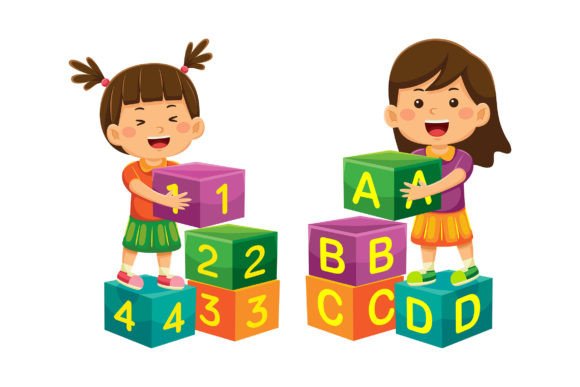
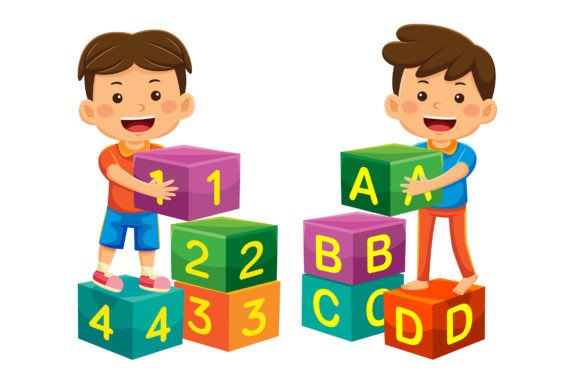
At its core, Back to School Vector Illustration 26 features a balanced composition—think open textbooks, stylized backpacks, pencils arranged with intention, and subtle academic motifs like graduation caps or chalkboard textures—all rendered in clean lines and intentional negative space. Its flat design approach avoids gradients, shadows, or complex textures that can complicate editing or reduce scalability. Because it’s built in Adobe Illustrator and delivered as EPS files (alongside high-resolution JPGs at 5000 × 5000 pixels), it retains fidelity whether scaled to fit a mobile app icon or blown up across a trade show banner.
The real utility emerges during customization. Designers can isolate a single pencil icon and recolor it to match brand guidelines, remove a notebook element to simplify the scene for a minimalist landing page, or layer it with icons from other illustrations in the pack—say, adding a digital tablet or laptop graphic—to reflect hybrid learning environments. That level of modularity isn’t guaranteed across all educational vector sets; many rely on grouped layers or embedded raster effects that resist granular edits.
How It Compares Across Common Use Cases
When evaluating resources for business branding or digital content, flexibility and compatibility are primary filters. Back to School Vector Illustration 26 performs consistently well in scenarios where precision and reusability matter:
- Social media campaigns: Its clean outlines and bold shapes hold up well in small thumbnails and Stories formats—unlike detailed hand-drawn illustrations that blur or lose legibility at smaller sizes.
- Landing pages and websites: SVG export is straightforward (via Illustrator), making integration into responsive layouts simple. The absence of transparency-heavy effects means fewer rendering inconsistencies across browsers.
- Print materials: With native vector support and 5000 × 5000 pixel JPG backups, it meets commercial print standards for brochures, posters, or presentation decks—even at large physical dimensions.
- Infographics and internal training assets: Because each object is independent, designers can extract and repurpose components (e.g., using only the calculator or globe icon) without rebuilding from scratch.
This contrasts with alternatives like AI-generated illustrations, which often lack layered structure and may embed uneditable paths or inconsistent stroke weights. It also differs from subscription-based illustration libraries where licensing restricts modification scope or prohibits redistribution—even internally.
Tradeoffs to Consider Before Choosing
No single resource fits every need—and understanding limitations helps avoid mismatched expectations. Back to School Vector Illustration 26 excels in versatility but assumes a baseline comfort with vector editing tools. Users unfamiliar with Illustrator’s Layers panel or Pathfinder functions may find the “easy to edit” claim aspirational without some learning investment. There’s no drag-and-drop web editor included; customization requires software access and basic proficiency.
Similarly, while the flat design style ensures broad compatibility and fast loading times, it doesn’t suit projects calling for realism, texture depth, or illustrative storytelling—such as children’s book art or immersive e-learning modules requiring character-driven scenes. In those cases, hand-illustrated or 3D-rendered assets may better serve narrative goals, even if they’re harder to adapt.
Color flexibility is another strength with nuance: yes, every shape can be recolored—but the original palette is intentionally restrained. That’s beneficial for brand alignment but may require additional effort if your project demands vibrant, multi-hued variations out of the box. Some users prefer illustration packs with pre-built alternate color schemes or swatch libraries, which this set does not include.
When Back to School Vector Illustration 26 Is Likely the Right Fit
This illustration is especially well-suited for professionals managing multiple touchpoints across an education-adjacent brand—tutors, edtech startups, curriculum developers, or university communications teams needing consistent, scalable assets. For example:
- A tutoring service launching a summer-to-fall campaign could use Back to School Vector Illustration 26 as the central visual for email headers, then extract individual icons (a clock, checklist, or notebook) for social media carousels—keeping visual continuity without repeating the full scene.
- An online course platform updating its onboarding flow might integrate simplified versions of the illustration into tooltips or progress indicators, adjusting colors to match UI states (e.g., green for completed steps, blue for active).
- A school district producing bilingual parent guides could reuse the same base illustration across language versions, changing only text labels and accent colors—reducing design time while maintaining recognizability.
In each case, the value lies not in the illustration alone, but in how efficiently it integrates into existing workflows and scales across outputs.
When You Might Explore Alternatives
If your work involves frequent, rapid iteration without dedicated design support—say, marketing managers building weekly newsletters in Canva—fully editable EPS files may introduce friction. In such contexts, drag-and-drop compatible PNG/SVG assets with built-in variants (light/dark mode, outlined/filled) could save time, even if they offer less long-term flexibility.
Similarly, if your audience skews younger or your messaging leans heavily on emotional resonance—think empathy, curiosity, or playfulness—a more expressive, character-based illustration style may communicate more effectively than flat-design abstraction. Back to School Vector Illustration 26 conveys clarity and professionalism, not whimsy or warmth—and that distinction matters depending on context.
Finally, budget constraints and usage scope matter. While this set offers strong value per illustration (100 pieces, high-res, cross-format), smaller projects needing only one or two themed assets may find single-purchase options or subscription models more cost-effective—especially if ongoing updates or new themes are anticipated.
Making a Practical Decision
Evaluating Back to School Vector Illustration 26 comes down to matching capabilities with actual workflow needs. Ask yourself:
- Do you regularly adjust colors, scale, or composition—and do you have the tools and knowledge to do so efficiently?
- Is consistency across platforms (web, print, social) a priority—and does your current toolkit support vector integration?
- How much time do you currently spend sourcing, adapting, or recreating similar visuals? Does the time saved justify the upfront investment?
- Are your visual goals aligned with flat, modern, modular aesthetics—or do they lean toward realism, motion, or narrative illustration?
There’s no universal “best” option—only what works most reliably for your specific constraints, skills, and output requirements. Back to School Vector Illustration 26 stands out for its balance of quality, editability, and thematic cohesion—but its usefulness is maximized when matched thoughtfully to the task at hand.